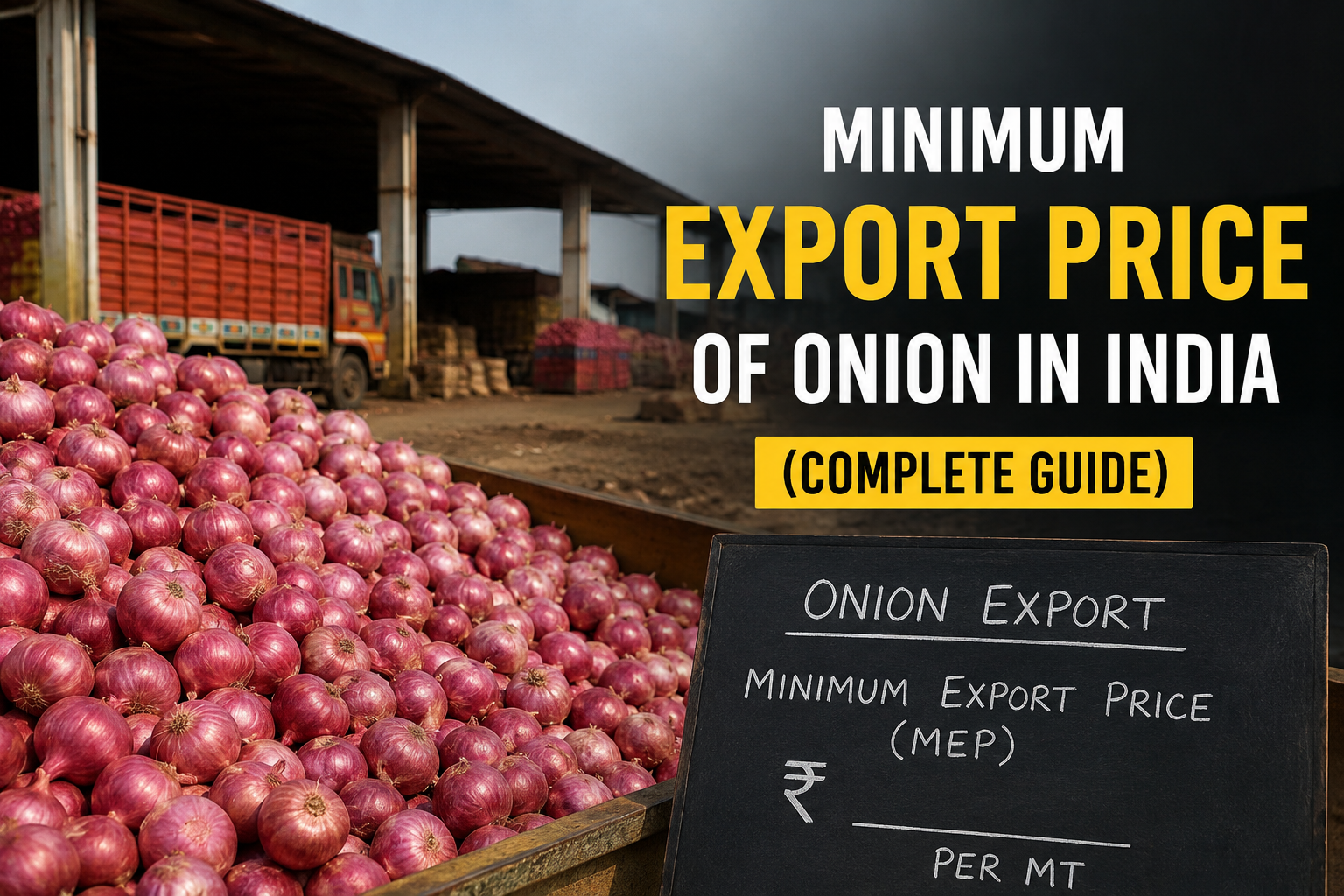

India, a global powerhouse in agricultural production, holds a significant position as one of the world’s largest producers and exporters of onions. This versatile kitchen staple is not only crucial for domestic consumption but also plays a vital role in India’s export economy. To manage the delicate balance between ensuring sufficient domestic supply and supporting its onion exporter in India, the government often implements various trade policies, including the Minimum Export Price of onion in India (MEP). While the concept of MEP has historically been a key tool, understanding its evolution and current status is essential for anyone involved in the Indian onion market.
Understanding the Minimum Export Price (MEP)
The Minimum Export Price (MEP) is a floor price set by the government, below which no exports of a particular commodity are allowed. The primary purpose of imposing an MEP on onions is to:
- Stabilize Domestic Prices: Prevent a sharp increase in local prices due to excessive exports, ensuring affordability for Indian consumers.
- Protect Farmer Interests: Guarantee a fair price for farmers by curbing exports when domestic prices are low.
- Manage Supply: Help maintain adequate domestic availability, especially during periods of lower production or high demand.
Historically, India has frequently used MEP, along with export duties and even export bans, as instruments to regulate onion exports. For instance, in October 2023, the government imposed an MEP of $800 per tonne to check soaring prices. Later, in May 2024, after lifting an export ban, an MEP of $550 per tonne was set, alongside a 40% export tax. Such measures were designed to manage demand-supply dynamics and control price fluctuations within the country.
The Evolution of India’s Onion Export Policy: A Recent Timeline
The government policy on onion export has been dynamic, responding to domestic production levels, price stability, and farmer concerns. Understanding this timeline provides crucial context for the current export environment:
- December 2023: The Indian government implemented a ban on all onion exports to increase domestic supply and combat an estimated 20% decline in Kharif and late Kharif production. This ban was initially set until March 31, 2024, but was later extended indefinitely.
- May 4, 2024: The ban was eventually lifted. However, the government set a Minimum Export Price (MEP) of USD 550 per tonne and imposed a significant 40% export tax. This made Indian onions less competitive in the global market.
- September 2024: A 20% export duty was put in place. This duty aimed to further regulate exports and ensure domestic availability.
- April 1, 2025: In a significant move to protect farmers’ interests and address falling onion prices due to robust rabi crop arrivals, the government decided to lift the 20% export duty. This decision came after sustained pressure from farmers and exporters.
- April 2026 (Current Status): As of April 2026, both the minimum price and the 20% export duty have been fully removed for export of onion in India. This policy shift has created a highly competitive environment for Indian onions in the international market. This removal of restrictions is a direct result of robust kharif crop production in 2024, favorable monsoon forecasts, and stable domestic market conditions.
This current scenario marks a positive outlook for agriculture exporters from India, as it reduces export costs and improves margins, making Indian onions more attractive to global buyers.
Navigating Onion Exports from India in 2026
With the removal of MEP and export duties, the current environment is highly favorable for onion exporter in India. If you’re looking to enter or expand in the global onion trade, here are key steps and considerations:
Essential Steps for Exporters
- Obtain Importer-Exporter Code (IEC): This is a mandatory registration issued by the Directorate General of Foreign Trade (DGFT) for any entity involved in export activities.
- Market Research: Identify target markets, understand demand, pricing trends, and specific import regulations in different countries. Top importing countries often include UAE, Bangladesh, Sri Lanka, Malaysia, and Nepal.
- Sourcing and Quality Control:
- Source high-quality onions that meet international standards for size, color, and freshness. Red onion exporters in India, particularly from regions like Nashik (Maharashtra), are renowned for their superior shelf life and bold flavor profile.
- Ensure proper sorting and grading to meet buyer specifications.
- Documentation and Compliance:
- Phytosanitary Certificate: Issued by India’s agricultural authorities, this certificate ensures the onions are free from pests and diseases.
- Certificate of Origin: Confirms the country where the goods were produced.
- Commercial Invoice & Packing List: Details of the shipment and goods.
- Bill of Lading / Airway Bill: Transportation document.
- FSSAI Clearance: May be required depending on the destination and specific product.
- Packaging and Logistics:
- Onions for export require specialized packaging, such as well-ventilated mesh or jute bags, to maintain freshness and prevent spoilage during transit.
- Utilize proper cold chain and warehouse handling, especially for long-distance shipments, often requiring reefer containers (0°C–4°C).
Asia Flock: Your Trusted Partner in Agricultural Exports
For businesses navigating the intricacies of agricultural exports from India, a reliable partner is invaluable. Asia Flock is committed to facilitating smooth and efficient international trade. As experienced vegetable exporters in India, we understand the nuances of the onion export policy India and ensure all regulatory compliances are met.
Whether you are looking to export premium red onion exporters in India or need a consistent vegetable supplier, Asia Flock provides comprehensive solutions. Our expertise extends beyond onions; we also offer high-quality products like cocopeat, serving as reputable cocopeat suppliers online. We leverage our deep market knowledge and robust logistics network to ensure your produce reaches global markets efficiently and in optimal condition.
Challenges and Strategic Considerations
While the current policy environment is favorable, onion export regulations can be subject to change. Exporters should remain vigilant:
- Policy Volatility: India’s trade policies have historically shown a pattern of reactivity, with frequent imposition and withdrawal of export restrictions. This creates uncertainty, making it crucial for exporters to include force majeure clauses in contracts to cover potential future bans or MEP changes.
- Market Fluctuations: Global demand and domestic production levels can impact prices. Staying updated on market trends and onion prices India is vital for competitive pricing.
- Quality Consistency: Maintaining high-quality standards is paramount to building long-term relationships with international buyers.
Conclusion
The landscape of the minimum export price of onion in India has undergone significant changes, culminating in the complete removal of both MEP and export duties as of April 2026. This has ushered in a period of unprecedented opportunity for onion exporter in India, allowing them to compete more effectively on the global stage. With robust production and a favorable policy environment, India is poised to strengthen its position as a leading global supplier of onions. For businesses like Asia Flock, committed to excellence in agricultural exports from India, this presents an exciting time to connect high-quality Indian produce with international demand. By staying informed, adhering to quality standards, and partnering with experienced vegetable exporters in India, we can collectively ensure the continued growth and success of the Indian onion export sector.
Frequently Asked Questions (FAQ)
Q1: Is there currently a Minimum Export Price (MEP) on onions from India?
A1: No, as of April 2026, the Minimum Export Price (MEP) on onions from India has been fully removed, along with the 20% export duty.
Q2: What was the purpose of the Minimum Export Price (MEP) on onions?
A2: The MEP was primarily imposed to stabilize domestic onion prices, ensure sufficient availability for Indian consumers, and protect the interests of farmers by preventing exports at very low prices.
Q3: What documents are required to export onions from India?
A3: Key documents include an Importer-Exporter Code (IEC), Phytosanitary Certificate, Certificate of Origin, Commercial Invoice, Packing List, and Bill of Lading/Airway Bill. FSSAI clearance might also be necessary.
Q4: Which countries are major importers of Indian onions?
A4: Major importing countries for Indian onions typically include UAE, Bangladesh, Sri Lanka, Malaysia, and Nepal.
Q5: How has the removal of export restrictions impacted Indian onion exporters?
A5: The removal of MEP and export duties has significantly improved the cost-competitiveness of Indian onions, making them more attractive in international markets and boosting export volumes. It has also reduced export costs by approximately $100-150 per tonne, enhancing exporter margins.