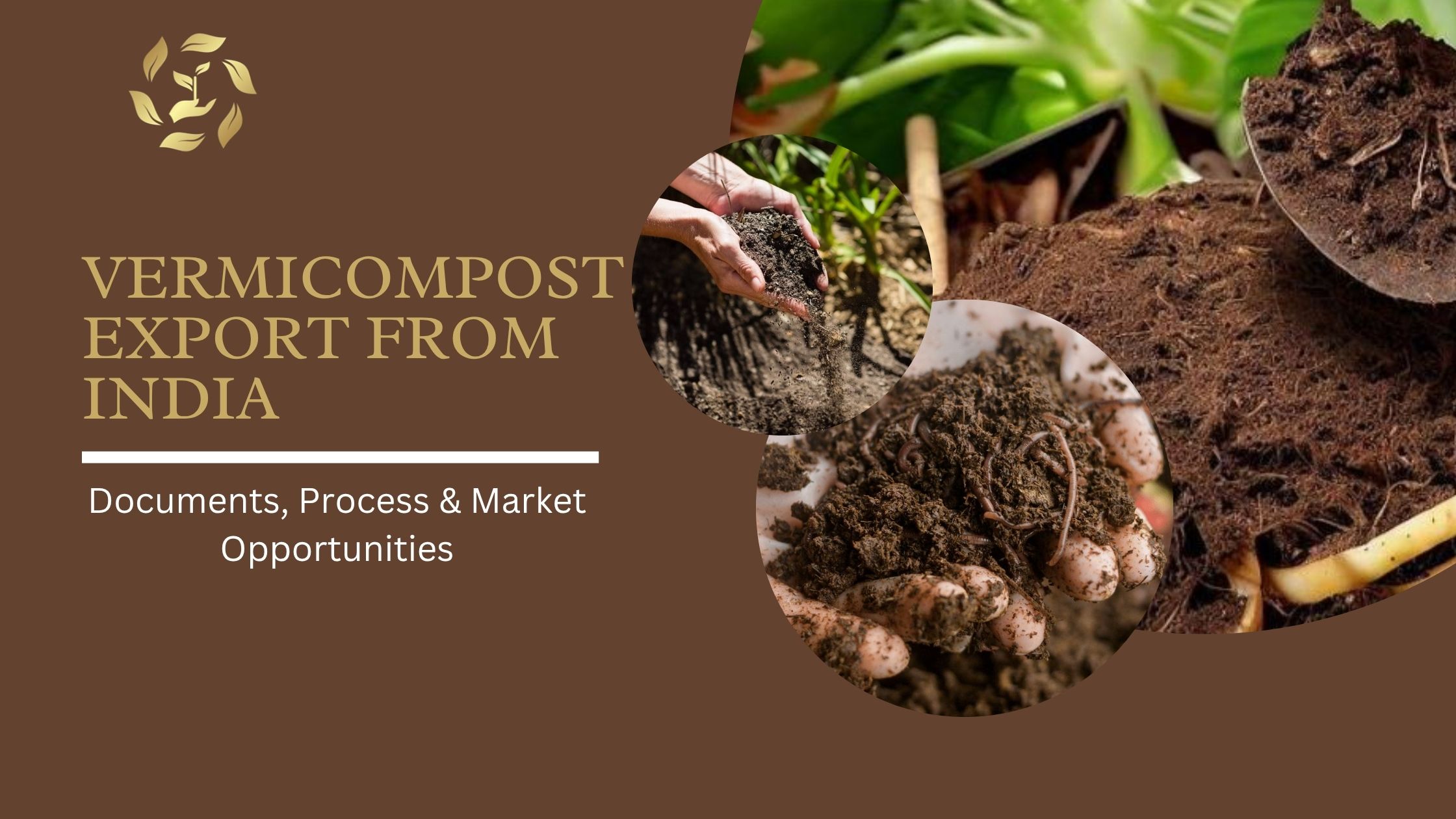

Exporting organic inputs is one of the fastest-growing business opportunities in the agriculture sector, and vermicompost export from India is gaining strong momentum. With rising global demand for organic farming inputs, entrepreneurs, farmers, and agribusiness owners are increasingly exploring how to export vermicompost from India and tap into international markets.
This complete guide covers the documents, export process, market opportunities, buyer countries, and licenses required—making it ideal for beginners and professionals alike.
Why Vermicompost Export Is Growing Globally
Countries across Europe, the Middle East, Africa, and Asia are shifting towards chemical-free agriculture, creating high demand for natural soil conditioners. Vermicompost—rich in beneficial microbes and nutrients—has become one of the most preferred organic fertilizers worldwide.
Many importers also prefer India due to its large production capacity, cost-effective labor, and high-quality organic farming practices.
Before learning how to export vermicompost from India, it’s important to understand whether vermicompost export is legally allowed.
Can We Export Vermicompost?
Yes, vermicompost can be exported legally, as long as the exporter follows the required certifications, quality standards, and documentation rules. Several countries classify vermicompost under organic fertilizers, so proper labeling and testing reports are essential.
Countries that import organic products usually demand strict quality testing to ensure the product is safe, pest-free, and free from harmful chemicals.
Top Countries That Import Vermicompost
Here is a vermicompost export countries list based on current demand trends:
- USA
- Canada
- UAE
- Qatar
- Saudi Arabia
- Sri Lanka
- Nepal
- Australia
- Malaysia
- United Kingdom (UK)
- Germany
These regions import organic fertilizers on a large scale due to the expansion of organic agriculture and home gardening markets.
When discussing organic manure export from India, vermicompost ranks among the top demanded products because of its eco-friendly nature.
Vermicompost Export License in India
To start exporting, obtaining the correct vermicompost export license in India is the first requirement. You need the following:
1. IEC (Import Export Code)
Issued by DGFT, IEC is mandatory to export any agricultural or commercial product.
2. APEDA Registration
Since vermicompost falls under agricultural commodities, APEDA registration is helpful for global certification and buyer trust.
3. Organic Certification (If Claimed)
If you claim your vermicompost as organic, you must obtain certification from:
- NPOP (India)
- USDA Organic (for US exports)
- EU Organic (for European markets)
4. MSME / Udyam Registration
Useful for government subsidies and business support schemes.
Vermicompost Export Documentation Checklist
Proper paperwork is essential for smooth export. Below is the complete vermicompost export documentation list:
- Commercial Invoice
- Packing List
- Certificate of Origin
- Phytosanitary Certificate (very important)
- Organic Certification (optional but recommended)
- Material Safety Data Sheet (MSDS)
- FSSAI License (sometimes required depending on buyer country)
- Bill of Lading / Airway Bill
- Lab Test Report showing nutrient content and microbial safety
- Export Agreement / Purchase Order
Countries importing bio compost organic fertilizer also require clear labeling like “For agricultural use only,” “Not for human consumption,” and “No chemicals added.”
How to Export Vermicompost from India (Step-by-Step Process)
Here is the detailed process that exporters follow. The primary keyword how to export vermicompost from India appears naturally for SEO.
1. Set Up Your Vermicompost Production Unit
Ensure consistent production capacity, proper compost beds, moisture control, and quality earthworms like Eisenia fetida or Eudrilus eugeniae. Export-quality vermicompost must be:
- Fine-textured
- Odor-free
- Free from stones, plastics, and impurities
- Well-packaged
2. Obtain Required Certifications
Getting your unit certified builds trust among foreign buyers.
Many buyers specifically ask for:
- Lab analysis report
- Microbial count report
- Heavy metal testing
- Organic certification
3. Understand Buyer Requirements
Different countries have different pesticide and microbial standards.
Before proceeding, confirm:
- Packaging size required
- Labeling format
- Moisture level
- Quantity per shipment
- Port of delivery
4. List Your Product on Global B2B Platforms
To target countries in the vermicompost export countries list, use:
- Alibaba
- Indiamart International
- TradeIndia
- ExportHub
- Global Sources
- Go4WorldBusiness
Most buyers search for “vermicompost export from India,” so optimize your listing using this keyword.
5. Arrange Packaging and Labeling
Export-quality packaging includes:
- Moisture-proof bags
- 1 kg, 5 kg, 10 kg, 25 kg, and 50 kg packaging
- Air-tight sealing
- Export barcode
Label must include:
- Product name: Vermicompost / Organic Manure
- Net weight
- Batch number
- Nutrient details
- Usage instructions
6. Complete Documentation & Licensing
Prepare all required papers mentioned in the vermicompost export documentation checklist.
Make sure moisture levels are below 20%, as per many export standards.
7. Choose Shipping Method
Exporters generally use:
- Sea Freight (economical for bulk shipments)
- Air Freight (fast for small orders)
Ports used for exporting vermicompost include:
- Mumbai
- Nhava Sheva
- Chennai
- Cochin
- Mundra
8. Final Dispatch & Payment
The last step in how to export vermicompost from India is shipment dispatch.
Secure payments through:
- Letter of Credit (LC)
- Advance Payment
- Bank Transfer (TT)
- Escrow services
Once the shipment reaches the destination port, customs clearance is handled based on the documents provided.
Market Opportunities for Vermicompost Export
The global organic fertilizer industry is growing at almost 10–12% annually, creating major opportunities for Indian exporters.
Why the demand is increasing:
- Farmers worldwide are avoiding chemical fertilizers
- Urban gardening and landscaping are booming
- Countries are promoting sustainable agriculture
- Increasing awareness about soil health
Vermicompost also pairs with the rising demand for bio compost organic fertilizer, increasing overall export potential.
Exporters who follow strict quality standards and proper documentation have a strong chance to capture international buyers.
Read More Blogs:-
- Step-by-Step Guide: How to Use NPK Fertilizer in Agriculture
- Top Benefits of Using Plant Growth fertilizer for Home Gardeners
Key Takeaways
- India has a massive opportunity in exporting vermicompost due to global demand for organic fertilizers.
- Proper documentation and licenses, including IEC, APEDA, and lab testing, are essential.
- Knowing how to export vermicompost from India helps beginners enter the export market easily.
- Top importing countries include the USA, UAE, UK, Australia, and Canada.
- High-quality packaging, labeling, and compliance improve buyer trust and export success.
Frequently Asked Questions
Q1. How to export vermicompost from India?
You need IEC, APEDA registration, organic certification (optional), proper documentation, quality testing, and a global buyer. Follow export rules and ship through sea or air freight.
Q2. Can we export vermicompost legally?
Yes. Vermicompost can be exported legally if all quality, packaging, and phytosanitary requirements are fulfilled.
Q3. What documents are required for vermicompost export?
You need a commercial invoice, packing list, phytosanitary certificate, certificate of origin, MSDS, test reports, and bill of lading.
Q4. Which countries import vermicompost?
USA, UAE, UK, Germany, Australia, Sri Lanka, Nepal, Malaysia, and Canada are major importers.
Q5. Do we need a vermicompost export license in India?
Yes. IEC is mandatory. APEDA registration and organic certification are highly recommended for international trade.