
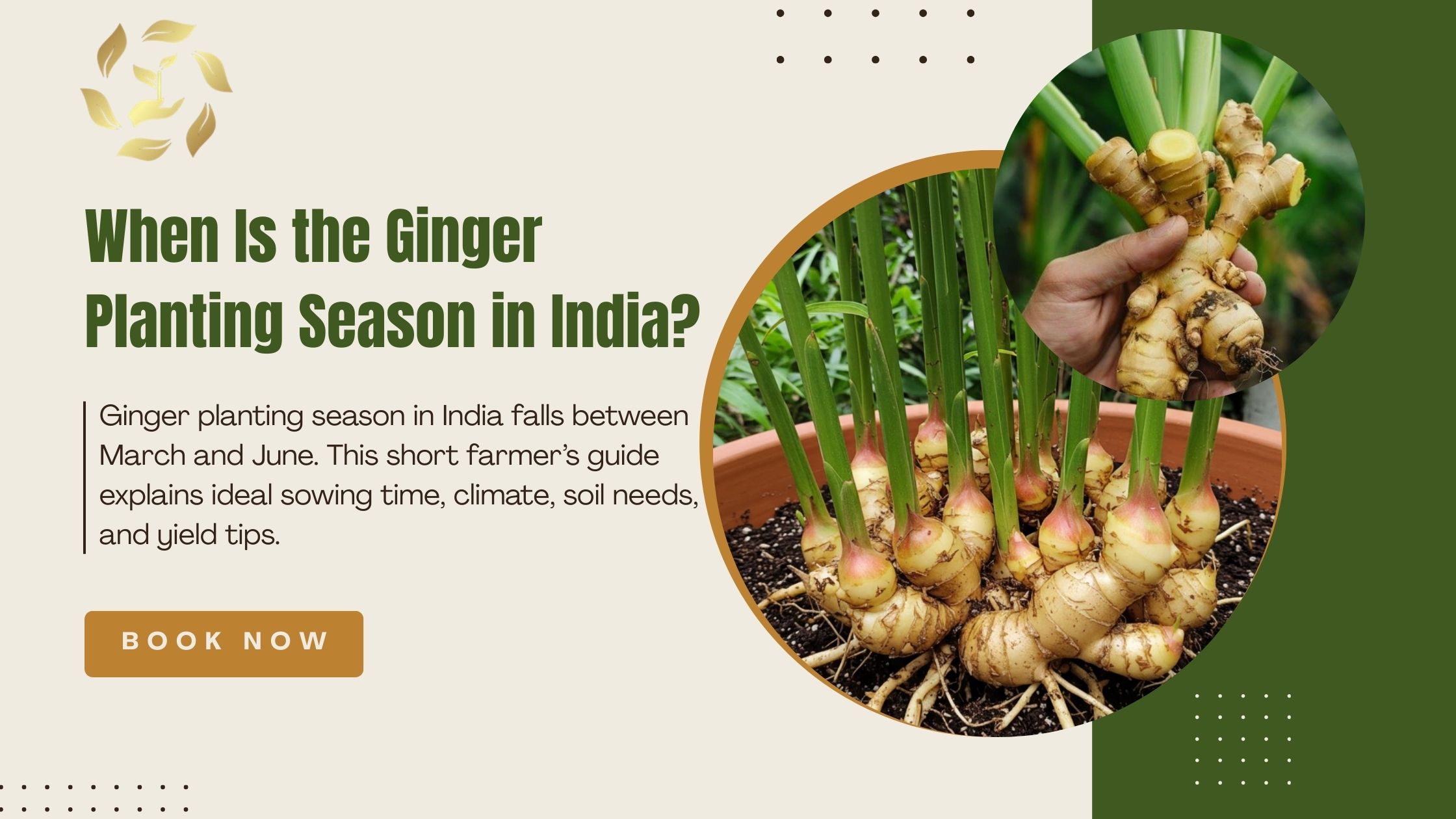

Ginger is one of India’s most valuable spice crops, widely used in food, medicine, and exports. Knowing the ginger planting season in India is crucial for farmers aiming for high yield, quality rhizomes, and better market prices.
This complete guide explains the right season, climate, soil, and best practices for successful ginger cultivation across Indian regions.
Did you know ?
India is the largest producer of ginger in the world, accounting for over 30% of global production? According to the Food and Agriculture Organization, India leads in ginger cultivation and output.
Why Understanding the Ginger Planting Season in India Matters
Planting ginger at the right time directly affects:
• Germination success
• Disease resistance
• Rhizome size and quality
• Export-grade production
Farmers who follow the correct ginger planting season in India achieve better productivity and long-term soil health.
Ginger Growing Season in India: An Overview
The ginger growing season in India depends mainly on rainfall and temperature patterns.
• Ginger is a warm-season crop
• Requires humid climate and moderate rainfall
• Grows best in tropical and subtropical regions
The full crop cycle lasts 7 to 9 months from planting to harvest.
Ideal Ginger Planting Season in India (Month-Wise)
The best ginger planting season in India starts with the arrival of monsoon.
• Primary season: April to June
• Early planting: February to March (with irrigation)
• Late planting: Up to July in high-rainfall areas
Planting during this window ensures strong sprouting and healthy root development.
Region-Wise Ginger Growing Season in India
Different regions follow slightly different planting schedules.
• South India: April to May
• Western India: May to June
• Eastern India: April to June
• North-East India: March to April
Matching local climate with the ginger growing season improves yield consistency.
Climate Requirements for Ginger Cultivation
Ginger thrives in specific climatic conditions.
• Temperature: 20°C to 30°C
• Rainfall: 1,500–3,000 mm annually
• Humidity: Moderate to high
Extreme cold or waterlogging can reduce crop quality during the ginger growing season in India.
Best Soil for Ginger Planting
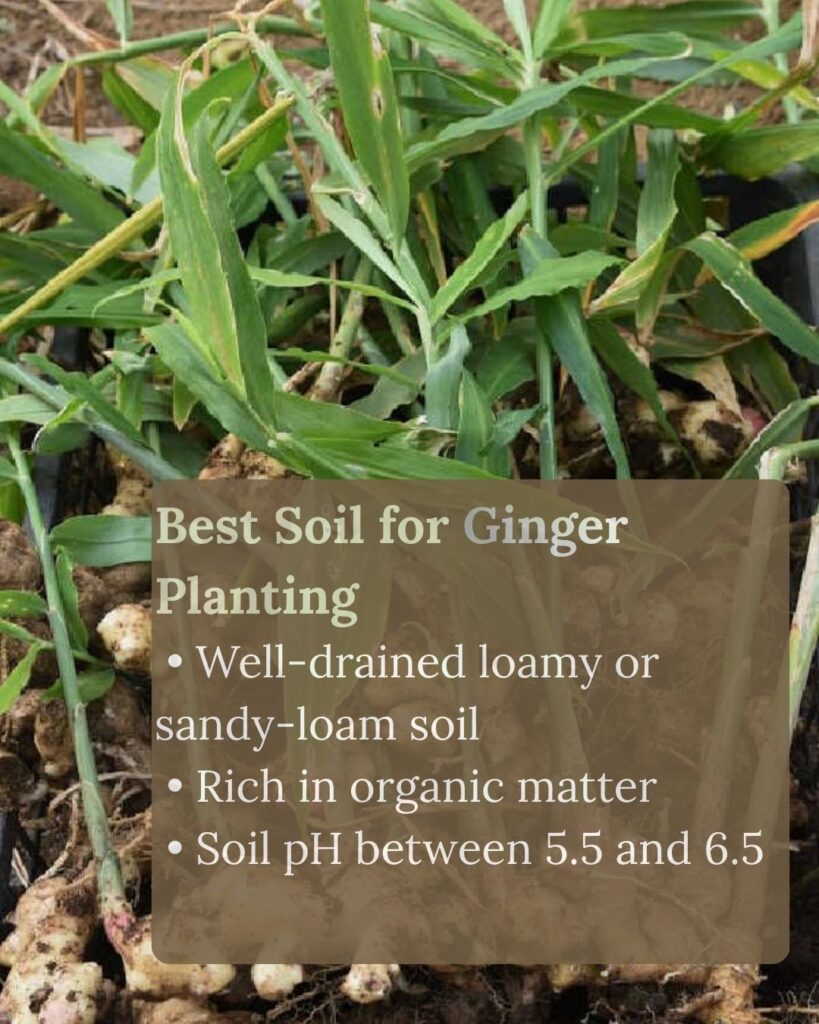
Healthy soil is essential during the ginger planting season in India.
• Well-drained loamy or sandy-loam soil
• Rich in organic matter
• Soil pH between 5.5 and 6.5
Raised beds are recommended to prevent water stagnation.
Land Preparation Before Ginger Planting
Good land preparation ensures uniform growth.
• Deep ploughing to loosen soil
• Remove weeds and crop residues
• Apply organic manure before planting
This step supports strong root development throughout the ginger growing season.
Seed Rhizome Selection Tips
Quality seed rhizomes are critical for success.
• Disease-free and mature rhizomes
• Each piece weighing 20–25 grams
• At least one healthy bud per piece
Seed quality directly impacts yield during the ginger planting season in India.
Planting Method and Spacing
Proper spacing improves airflow and reduces disease.
• Spacing: 20–25 cm between plants
• Row spacing: 25–30 cm
• Plant depth: 4–6 cm
Mulching after planting helps retain moisture and regulate soil temperature.
Watering Schedule During Ginger Growing Season
Water management is vital.
• Light irrigation after planting
• Regular watering during dry spells
• Avoid overwatering during heavy rains
Balanced moisture is key throughout the ginger growing season in India.
Nutrient Management for Better Yield
Nutrient-rich soil supports export-quality ginger.
• Organic manure at planting
• Split application of nitrogen
• Potassium for rhizome development
These practices align with sustainable farming and organic vegetables export from India.
Weed and Pest Management
Timely care prevents yield loss.
• Mulching reduces weed growth
• Manual weeding when required
• Monitor for rhizome rot and leaf spot
Healthy crops ensure consistency in the production of fruits and vegetables in India.
Harvesting Time for Ginger
Harvesting depends on end use.
• Green ginger: 5–6 months
• Dry ginger: 7–9 months
Leaves turning yellow signal maturity during the final stage of the ginger growing season.
Post-Harvest Handling Tips
Proper handling maintains quality.
• Clean and dry rhizomes
• Store in cool, ventilated areas
• Grade for size and appearance
Good post-harvest practices improve market value and export potential.
Planning to start ginger farming this season?
Follow the right ginger planting season in India, adopt best practices, and grow high-quality ginger that meets domestic and export demand. Start your cultivation journey today for better returns and long-term success.
Key Takeaways
• The best ginger planting season in India is April to June
• Climate and soil preparation directly affect yield
• Proper spacing and watering improve crop health
• Organic practices support sustainable farming
• Timely harvesting ensures premium market quality
Related Blogs:-
Fresh Ginger Export from India: Countries, Benefits & Demand Trends
Frequently Asked Questions
Q1. When does the ginger planting season in India start?
The ginger planting season in India usually begins from April with the onset of monsoon.
Q2. How long is the ginger growing season?
The ginger growing season lasts between 7 and 9 months depending on climate and variety.
Q3. Can ginger be planted before monsoon?
Yes, ginger can be planted early with assured irrigation facilities.
Q4. Which soil is best for ginger cultivation?
Well-drained loamy soil rich in organic matter is ideal.
Q5. Is ginger suitable for organic farming?
Yes, ginger adapts well to organic farming systems and export markets.