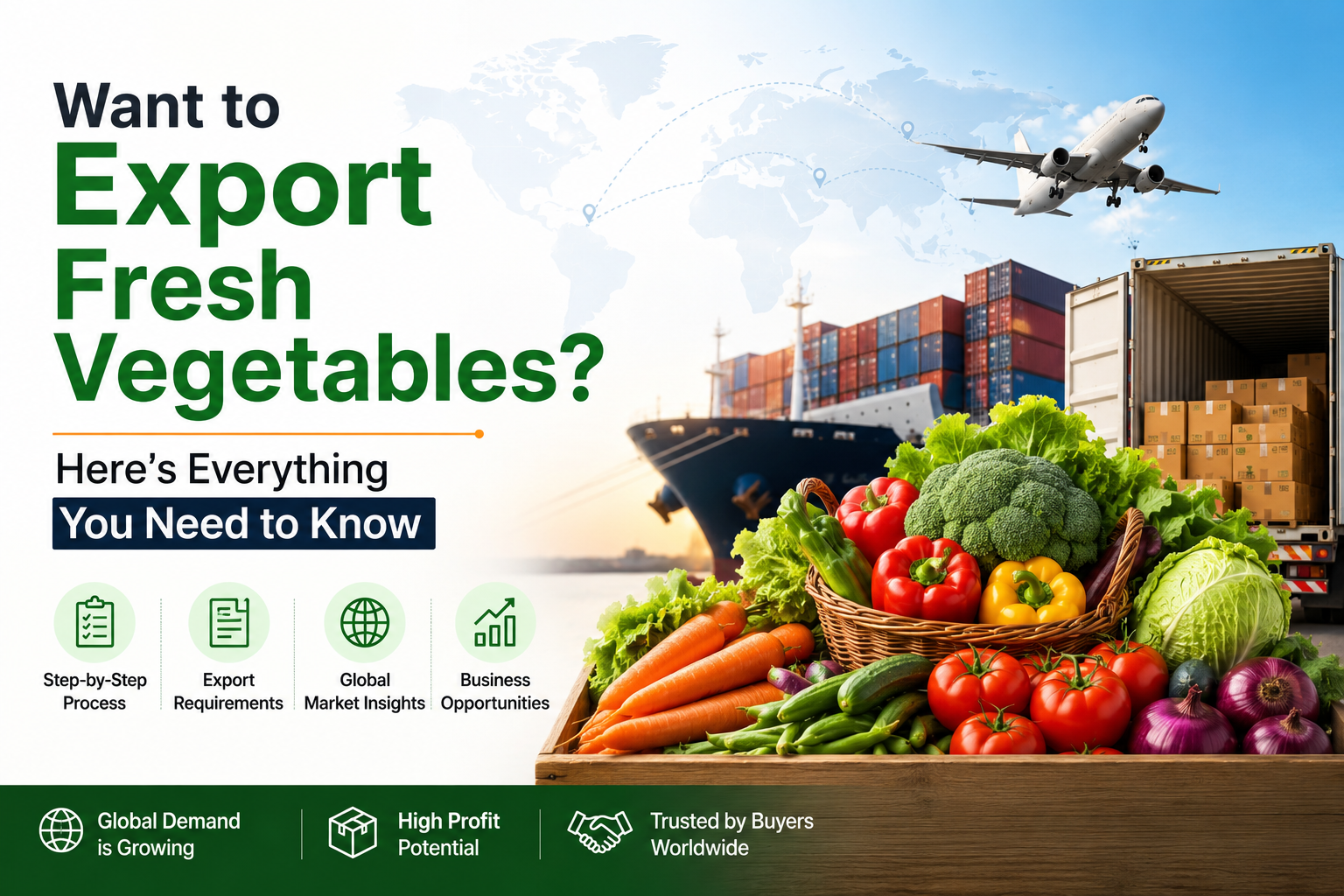

If you have ever looked at India’s agricultural market and wondered whether exporting vegetables can become a serious business, the answer is yes—and a profitable one. India already supplies vegetables to dozens of international markets. The real question is how to export fresh vegetables correctly so your products reach buyers fresh, compliant, and profitable. According to APEDA, India exported fresh fruits and vegetables worth around USD 1.8 billion in FY 2024–25, with vegetables contributing about USD 819 million. (APEDA)
That tells you something important: the market is already proven. The challenge is not whether exporting works. It’s a business where one delayed shipment can cost a lot, but one reliable buyer can change your entire operation. Think of it like running a relay race—every stage matters, from farm sourcing to customs clearance.
For businesses entering vegetable export from india, the timing is excellent. Countries with large Indian communities—like UAE, Oman, Qatar, and the UK—regularly import onions, potatoes, okra, green chilli, and other staple vegetables. If your process is organized and quality stays consistent, export can become a recurring income stream rather than one-time trade.
Why Vegetable Exports Are Growing So Fast
India’s climate is like a natural production engine. From north to south, there’s always some region harvesting something. That makes year-round supply possible, which global importers value because supermarket chains and wholesale markets cannot afford empty shelves. APEDA reports India produced over 207 million metric tonnes of vegetables in FY24, making it one of the world’s largest producers. (APEDA)
The interesting part is not just production. It’s consistency. Overseas buyers want suppliers who can send exact grades, proper packaging, and timely shipments every single week. That’s why exporters who understand standards usually scale quickly. The produce itself may be simple—onions, potatoes, chillies—but the backend process decides success.
Another factor is pricing. Indian vegetables often remain cost-effective compared to competitors because of strong domestic production and labor availability. That allows exporters to stay competitive in international wholesale markets. When freight and packaging are optimized, even a modest shipment can generate strong margins.
Top Exported Vegetables from India
Some vegetables dominate international demand because they store well, travel better, and already have established trade channels.
| Vegetable | Major Markets | Export Strength |
| Onion | Bangladesh, UAE, Malaysia | Very High |
| Potato | Nepal, Sri Lanka, UAE | High |
| Green Chilli | Gulf, Europe | Growing |
| Okra | UK, Saudi Arabia | Strong |
| Drumstick | Europe | Emerging |
Onions remain a major driver, which is why export of onion in india is one of the most searched agricultural trade topics. Related sectors like red onion exporters continue expanding because buyers prefer reliable exporters who can maintain grading consistency.
You’ll also notice rising opportunities in potato export from india and green chilli export from india, especially for buyers seeking fresh produce for diaspora markets. If you already handle these domestically, export becomes a logical next step.
How to Export Fresh Vegetables Step by Step
Many people assume exporting begins with finding a foreign buyer. Actually, it starts with registration. Before you even quote prices, your business must be legally prepared. That includes business registration, GST, current account, and IEC (Import Export Code).
After that, APEDA registration becomes essential for fresh produce. APEDA manages scheduled agricultural exports and certifications. Their HortiNet system also helps track produce for export-quality compliance. (APEDA Website)
Here’s the usual process:
- Register business entity
- Apply IEC
- Obtain APEDA registration
- Source produce from farms or mandi network
- Grade and sort
- Pack in export cartons
- Conduct phytosanitary checks
- Arrange shipping
This sequence is the backbone of how to export fresh vegetables successfully.
Required Documents
Documentation is where many first-time exporters fail. Missing one certificate can stop cargo at port.
Key documents usually include:
- IEC Certificate
- APEDA Registration
- GST Registration
- FSSAI License
- Phytosanitary Certificate
- Commercial Invoice
- Packing List
- Bill of Lading
- Certificate of Origin
Each destination country may add specific requirements. Europe may require residue testing. Gulf buyers often prioritize freshness and appearance. That means your export strategy should adapt to target country expectations.
If you’re asking how can i export vegetables from India, the answer always includes mastering paperwork. It’s not glamorous, but it protects your cargo and payments.
Finding Reliable Supply
A strong exporter is not just a seller—it’s a supply chain manager. If you depend on random mandi purchases every week, quality becomes unpredictable. Buyers notice quickly.
The best exporters work directly with farmers or collection centers. They maintain fixed sourcing regions for consistency. For example, Nashik for onions, Agra for potatoes, and southern regions for chillies. That creates trust.
Imagine selling apples without seeing the orchard. That’s what random sourcing feels like to buyers. Build traceability. It matters more than flashy branding.
Packaging and Cold Chain
Fresh vegetables are fragile. Exporting them is like sending ice cream through summer—without temperature control, everything collapses.
Export-grade packaging typically includes:
- Ventilated corrugated cartons
- Mesh bags
- Food-grade liners
- Labeling stickers
- Moisture control layers
Cold chain matters especially for leafy vegetables and green chillies. Delays at port can reduce shelf life drastically. That’s why serious exporters invest in pre-cooling and reefer containers.
The rise in logistics costs has made efficiency even more important. Recent trade reports showed freight disruptions significantly affected vegetable shipments to Gulf countries during seasonal peaks. (The Times of India)
Cost to Start
A beginner can start with moderate investment, depending on shipment size.
| Component | Estimated Cost (INR) |
| Registration & licenses | ₹30,000–₹60,000 |
| Packaging setup | ₹50,000+ |
| Cold storage access | ₹1 lakh+ |
| Trial shipment | ₹2–₹5 lakh |
The capital may sound high, but even one stable buyer can offset setup quickly.
Profit Margins
Margins depend heavily on:
- Product
- Season
- Freight
- Destination
- Packaging quality
Onions may generate smaller per-kg margins but larger volume. Green chilli often gives better per-unit returns due to niche demand.
A shipment isn’t just selling vegetables—it’s selling reliability. Buyers pay more to exporters who prevent losses.
How to Find Overseas Buyers
This is where many people struggle. Export licenses alone do not create sales.
Use:
- B2B platforms
- Trade fairs
- APEDA buyer directories
- LinkedIn sourcing
- Importer databases
- Direct WhatsApp outreach
Reddit export communities also show many new exporters finding partners through digital networking and B2B platforms. (Reddit)
The key is persistence. Buyers often test small quantities first. Deliver flawlessly, and larger orders follow.
Why Onion, Potato, and Green Chilli Lead
These crops are practical export products because they balance shelf life and demand.
You can study linked examples:
These categories stay relevant because food consumption is constant. Trends change in tech. People still need food every day.
Common Mistakes to Avoid
New exporters often fail because they:
- Ignore market research
- Depend on one supplier
- Skip certifications
- Underestimate freight
- Overpromise to buyers
Your first shipment teaches more than ten courses. But expensive lessons hurt. Preparation reduces risk.
Conclusion
Fresh vegetable exports are not just for large corporations anymore. With proper registrations, sourcing, packaging, and buyer outreach, even smaller businesses can enter global trade. The demand for Indian onions, potatoes, and chillies remains strong, and India’s production scale gives exporters a huge advantage. The secret is simple: quality plus consistency.
If you’re planning how to export fresh vegetables, start with one product, one destination, and one reliable buyer. Scale after the process becomes smooth. Businesses like Asia Flock are part of this growing ecosystem helping connect Indian agricultural supply with global demand.
FAQs
1. Which vegetable is most profitable for export?
Onion, green chilli export, and okra are among strong-performing categories depending on market.
2. Which countries buy Indian vegetables?
UAE, Bangladesh, Nepal, Oman, Malaysia, and UK are major importers. (APEDA)
3. What is 20,000 crore export promotion?
The ₹20,000 crore export promotion usually refers to government-backed schemes and incentives designed to strengthen Indian exports across sectors, including agriculture. Programs from Agricultural and Processed Food Products Export Development Authority and the central government support exporters through infrastructure, subsidies, logistics improvement, and market access initiatives. These schemes aim to improve export competitiveness and increase India’s global agricultural trade. Exporters often benefit through financial assistance for cold storage, packaging, and certifications.
4. Is APEDA mandatory for vegetable export?
Yes, for most fresh vegetable exports, APEDA registration is generally required.