


Green chillies are among India’s most demanded fresh vegetable exports. Countries across the Middle East, Southeast Asia, Europe, and North America import Indian green chillies because of their pungency, freshness, and quality. However, many exporters face a common challenge—maintaining freshness during storage and transportation.
If you’re wondering how to store green chillies properly before domestic distribution or international export, you’re in the right place.
Poor storage can lead to moisture loss, fungal growth, discoloration, and reduced market value. On the other hand, proper storage techniques can significantly increase shelf life, maintain appearance, and help exporters earn better profits.
In this detailed guide, you’ll learn how to store green chillies, packaging techniques, ideal temperatures, humidity levels, export best practices, and practical tips used by successful exporters.
Why Proper Green Chilli Storage Matters for Exporters
Green chillies are highly perishable vegetables. Once harvested, they continue to respire and lose moisture. Without proper handling, freshness can decline rapidly.
Proper storage helps:
- Extend shelf life
- Preserve color and texture
- Reduce spoilage losses
- Maintain export-grade quality
- Improve buyer satisfaction
- Increase profitability
For exporters, even a small percentage of spoilage can result in significant financial losses. That’s why understanding how to store green chillies correctly is essential for success in international markets.
Understanding Green Chilli Shelf Life
The shelf life of green chillies depends on several factors:
| Storage Method | Approximate Shelf Life |
| Room Temperature | 3-5 Days |
| Refrigeration | 2-3 Weeks |
| Controlled Cold Storage | 4-6 Weeks |
| Export Cold Chain System | Up to 45 Days |
Factors affecting shelf life include:
- Harvest maturity
- Temperature
- Humidity
- Packaging quality
- Transportation conditions
- Handling practices
The better these factors are controlled, the longer your chillies will remain fresh.
How to Store Green Chillies Before Export
Before packaging, proper post-harvest handling is critical.
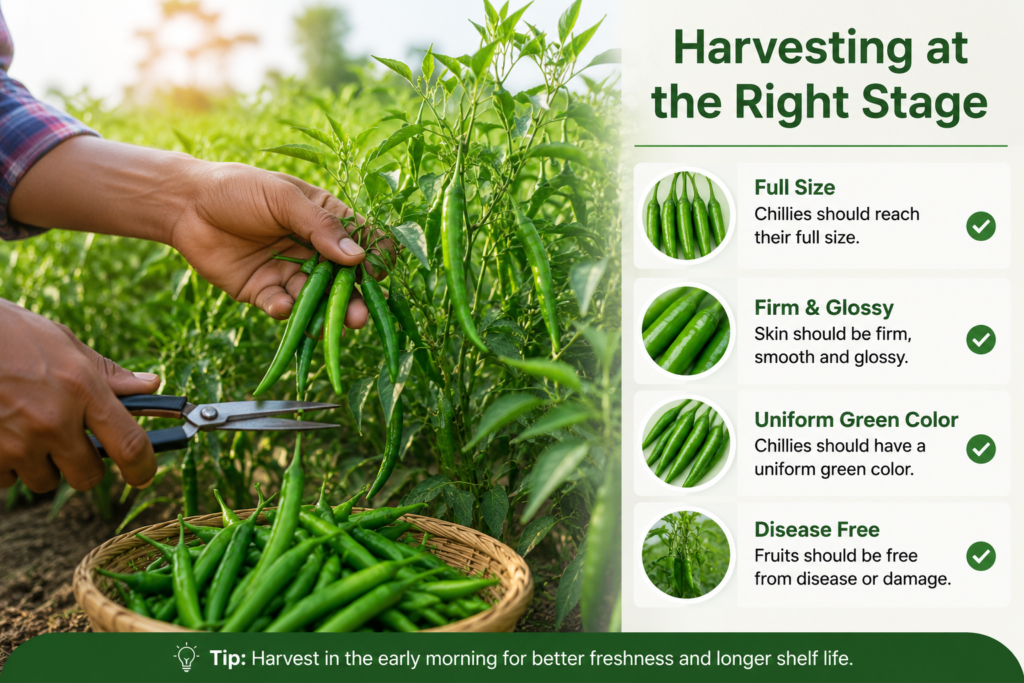
Harvesting at the Right Stage
Green chillies should be harvested when:
- They reach full size
- Skin is firm and glossy
- Color is uniformly green
- Fruits are free from disease
Overripe chillies deteriorate faster during storage.
Sorting and Grading
After harvesting:
- Separate chillies by size.
- Remove discolored produce.
- Grade according to export standards.
- Ensure uniformity in packaging.
Export buyers prefer consistency in appearance and quality.
Removing Damaged Chillies
One damaged chilli can affect several others through moisture buildup and microbial growth.
Always remove:
- Cracked chillies
- Diseased fruits
- Insect-damaged produce
- Overripe chillies
This simple step significantly improves storage performance.
How to Store Green Chillies in Fridge
Many farmers and small exporters ask how to store green chillies in fridge before shipment.
The refrigerator method is ideal for short-term storage.
Ideal Refrigerator Temperature
Store green chillies at:
- Temperature: 7°C to 10°C
- Relative Humidity: 90-95%
Avoid temperatures below 5°C because chilling injury may occur.
Signs of chilling injury include:
- Softening
- Water-soaked spots
- Surface pitting
- Discoloration
Best Containers for Storage
For fridge storage:
- Use perforated plastic bags.
- Use breathable vegetable storage containers.
- Avoid sealed bags with trapped moisture.
- Place paper towels inside containers to absorb excess moisture.
These practices help maintain freshness for several weeks.
Quick Fridge Storage Checklist
✅ Wash only when necessary
✅ Dry thoroughly
✅ Store in perforated bags
✅ Maintain consistent temperature
✅ Avoid overcrowding
Following these steps is one of the easiest answers to how to store green chillies in fridge effectively.
Packaging Methods for Export Quality Green Chillies
Packaging plays a major role in maintaining freshness during export.
Ventilated Plastic Crates
Plastic crates offer:
- Better airflow
- Reduced bruising
- Easy stacking
- Reusability
Many professional exporters prefer plastic crates during collection and pre-cooling stages.
Corrugated Export Boxes
Corrugated fiberboard boxes provide:
- Protection during shipping
- Easy palletization
- Reduced mechanical damage
- Improved presentation
Boxes should include ventilation holes to maintain airflow.
Modified Atmosphere Packaging (MAP)
Advanced exporters often use Modified Atmosphere Packaging.
Benefits include:
- Reduced respiration rates
- Slower ripening
- Extended shelf life
- Better color retention
MAP technology is particularly useful for long-distance exports.
Temperature and Humidity Requirements
Proper environmental control is the foundation of successful chilli storage.
Recommended Conditions
| Factor | Recommended Level |
| Temperature | 7°C–10°C |
| Relative Humidity | 90–95% |
| Air Circulation | Continuous |
| Ventilation | Moderate |
These conditions help minimize moisture loss while preventing fungal growth.
Cold Chain Management
A strong cold chain includes:
- Pre-cooling after harvest
- Cold storage facilities
- Refrigerated transportation
- Temperature monitoring
- Proper unloading procedures
Breaking the cold chain can drastically reduce product quality.
Transportation Considerations
During export transportation:
- Use refrigerated containers.
- Monitor temperatures continuously.
- Avoid exposure to sunlight.
- Maintain humidity levels.
- Minimize loading delays.
These precautions preserve freshness until delivery.
Common Mistakes That Reduce Shelf Life
Many exporters unknowingly reduce shelf life through poor handling.
Washing Before Storage
Excess moisture promotes mold growth.
Unless necessary, avoid washing chillies before storage.
Poor Ventilation
Lack of airflow increases heat buildup and spoilage.
Always use ventilated packaging.
Mixing Damaged Produce
A few damaged chillies can accelerate deterioration of an entire shipment.
Sort carefully before packing.
Temperature Fluctuations
Frequent temperature changes increase condensation and microbial growth.
Maintain stable storage conditions throughout the supply chain.
Export Documentation and Quality Standards
Storage quality is only one aspect of successful exports.
Exporters should also ensure:
- Phytosanitary Certificate
- FSSAI Compliance
- APEDA Registration
- Quality Inspection Reports
- Proper Labeling
- Buyer Specifications Compliance
For updated agricultural export guidelines, exporters can refer to the official APEDA website
Meeting documentation requirements helps avoid shipment delays and rejections.
How AsiaFlock Supports Agricultural Exporters
At AsiaFlock, we regularly share practical information that helps farmers, traders, and exporters improve profitability.
If you’re involved in chilli exports, you may also find our detailed guide on green chilli price useful.
Understanding current pricing trends can help exporters make better storage and marketing decisions.
AsiaFlock also publishes valuable resources related to:
- Agricultural exports
- Export documentation
- Commodity pricing
- International trade opportunities
- Supply chain management
Related Agricultural Export Opportunities
Exporters interested in green chillies often diversify into other agricultural products.
Onion Export
India remains one of the world’s largest onion suppliers.
Benefits include:
- Strong international demand
- Established export markets
- Consistent trading opportunities
Learning about onion export in India can help exporters expand their portfolio.
Potato Export
Potato export in India also offer excellent potential.
Advantages include:
- Large market demand
- Long storage capability
- Multiple destination countries
Combining green chilli export and potato export operations can improve business sustainability.
Frequently Asked Questions
How to store green chillies for winter?
To store green chillies for winter, wash and dry them thoroughly, remove stems, and keep them in airtight freezer bags. Freezing helps preserve freshness for several months.
How to store green chillies long term?
For long-term storage, use freezing, dehydration, or controlled cold storage. Commercial exporters typically rely on cold-chain systems maintained between 7°C and 10°C.
How to store green chillies in the fridge?
Store chillies in perforated plastic bags or breathable containers at 7°C to 10°C. Keep moisture levels controlled and avoid sealing them completely.
How to store green chillies for months?
Freezing is the most effective method for household storage. Commercial exporters use controlled atmosphere storage and refrigeration systems.
How to preserve green chillies in oil?
Green chillies can be preserved in sterilized jars filled with edible oil. This method is commonly used for culinary purposes rather than export.
How to store green chillies for a long time without fridge?
You can sun-dry chillies or dehydrate them using a food dryer. Properly dried chillies can remain usable for several months.
How to store green chillies in freezer?
Wash, dry, and trim the chillies before placing them in freezer-safe bags. Remove excess air before sealing.
How to store chillies for months without losing quality?
The best methods include freezing, controlled cold storage, dehydration, and modified atmosphere packaging depending on intended use.
Conclusion
Knowing how to store green chillies properly can make a significant difference in export success. From harvesting and grading to packaging and cold-chain management, every step influences product quality and shelf life.
For exporters, maintaining temperatures between 7°C and 10°C, using ventilated packaging, and following strict quality control measures can dramatically reduce losses and improve buyer satisfaction.
Whether you’re a farmer, trader, or exporter, implementing these storage techniques will help you deliver fresher produce, secure repeat customers, and maximize profitability in competitive international markets.
For more agricultural export insights, pricing trends, and industry updates, explore AsiaFlock’s resources and stay ahead in the growing global fresh produce trade.