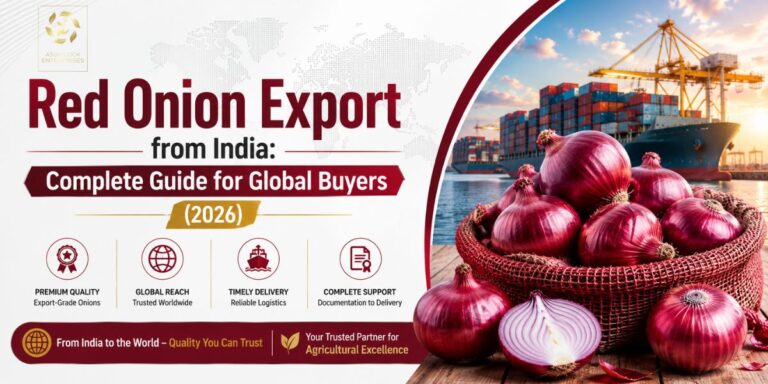
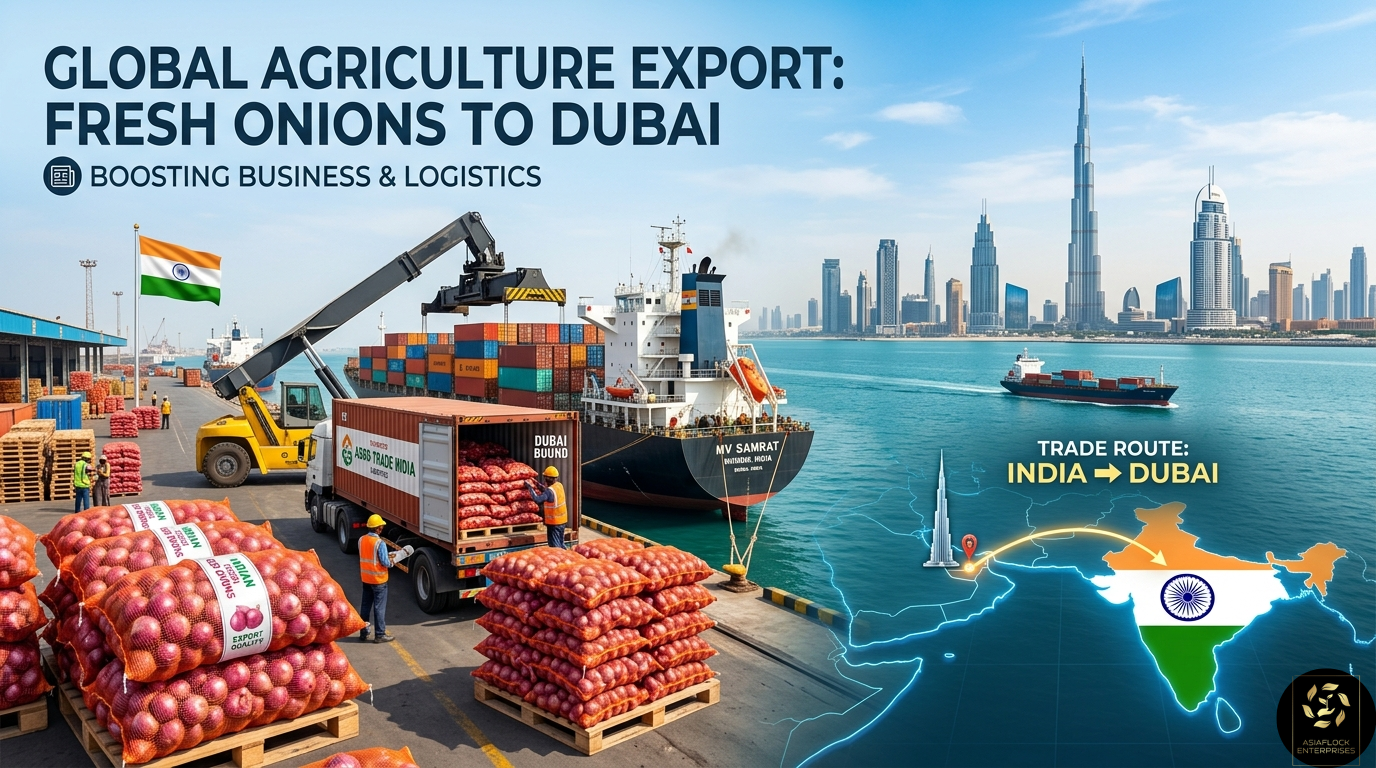

The UAE remains one of the largest importers of Indian agricultural products, making onion exports a highly profitable business opportunity. If you’re searching for how to export onion from india to dubai, understanding the documentation, packaging, logistics, and quality requirements is essential for success.
This comprehensive 2026 guide explains everything exporters need to know, from sourcing onions in India to delivering them to buyers in Dubai.
Why Export Onions from India to Dubai?
India is among the world’s leading onion-producing countries, supplying premium-quality onions to international markets throughout the year. Dubai’s growing population, hospitality sector, and food processing industries create consistent demand for imported onions.
For exporters, onion shipments offer:
- Strong demand throughout the year
- Competitive sourcing costs
- Short transit time to UAE ports
- Attractive profit margins
- Opportunities to expand into other vegetables for export
Many agricultural exporters who start with onions later diversify into vegetables for export such as potatoes, garlic, green chillies, and okra.
Market Demand for Indian Onions in Dubai
Dubai imports significant quantities of onions for supermarkets, wholesalers, restaurants, and food manufacturers. Indian onions are preferred because of:
- Consistent quality
- Long shelf life
- Competitive pricing
- Reliable supply chain
Before beginning the process of how to export onion to dubai, exporters should identify buyers, distributors, or importers in UAE and understand local import regulations.
Documents Required to Export Onions from India
To successfully complete the process of how to export onion from india, exporters need the following documents:
1. Import Export Code (IEC)
Issued by the Directorate General of Foreign Trade (DGFT), IEC is mandatory for international trade.
Reference:
https://www.dgft.gov.in
2. APEDA Registration
Agricultural exporters should obtain registration from APEDA.
3. Commercial Invoice
Contains details of products, quantity, pricing, and buyer information.
4. Packing List
Provides information about the packaging, weight, and number of bags or cartons.
5. Phytosanitary Certificate
Issued by the Plant Quarantine Authority to confirm that the onions meet plant health requirements.
6. Certificate of Origin
Confirms the goods were produced in India.
7. Bill of Lading
Issued by the shipping line after loading the cargo.
8. Insurance Certificate
Protects the shipment against loss or damage during transit.
Step-by-Step Process: How to Export Onion from India to Dubai
Step 1: Source Export-Quality Onions
Procure onions from reliable farming clusters and agricultural markets. Quality consistency is critical for export success.
Step 2: Sorting and Grading
Remove damaged, undersized, sprouted, and rotten onions.
Step 3: Packaging
Use export-grade packaging designed for international transportation.
Step 4: Obtain Required Certifications
Secure phytosanitary and export-related approvals before shipment.
Step 5: Book Freight
Choose between reefer or dry containers based on shipment conditions.
Step 6: Customs Clearance
Complete Indian export formalities and UAE import requirements.
Step 7: Delivery to Dubai Buyer
After customs clearance in UAE, goods are delivered to the importer or distributor.
How to Pack Vegetables for Export
Proper packaging directly affects product quality and shelf life.
When considering how to pack vegetables for export, follow these practices:
- Use ventilated mesh bags for onions
- Maintain proper airflow
- Avoid overloading bags
- Use moisture-resistant packaging
- Apply clear labeling
- Stack pallets securely
For mixed consignments containing vegetables for export, each product should be packed according to its specific temperature and handling requirements.
How to Export Vegetables from India to Dubai
The process of how to export vegetables is similar to onion exports.
Key steps include:
- Market research
- Buyer identification
- Export registration
- Product grading
- Packaging
- Cold chain management
- Freight booking
- Customs documentation
Apart from onions, exporters frequently ship:
- Potatoes
- Okra
- Garlic
- Tomatoes
- Green chillies
- Drumsticks
Many exporters involved in green chilli export also use the same distribution channels in Dubai, helping reduce logistics costs and increase profitability.
Reefer or Dry Container – Which Is Better?
One of the most common questions exporters ask is whether to use a reefer container or a dry container.
Dry Container
Best for:
- Well-cured onions
- Short transit routes
- Lower shipping costs
Advantages:
- Affordable freight rates
- Widely available
- Suitable for properly dried onions
Reefer Container
Best for:
- Sensitive vegetables
- High-value agricultural products
- Extended storage periods
Advantages:
- Temperature control
- Reduced spoilage risk
- Better quality preservation
For most onion exports to Dubai, exporters generally prefer dry containers when the onions are properly cured and packed.
Which Quality of Onion Is Not Good for Export?
Understanding which quality of onion is not good for export can prevent shipment rejections.
The following onions should never be included in export consignments:
- Sprouted onions
- Rotten onions
- Diseased onions
- Mechanically damaged onions
- Overly small onions
- Moisture-damaged onions
- Soft onions
- Discolored onions
Export buyers in Dubai expect consistent sizing, color, and freshness.
Minimum Export Price of Onion in India
A topic frequently searched by exporters is the minimum export price of onion in india.
The Government of India may impose or revise Minimum Export Price (MEP) policies depending on domestic supply conditions and food inflation concerns. Exporters should regularly monitor official notifications before finalizing contracts.
Since MEP policies can change, checking the latest government updates is essential before shipment planning.
Cost of Exporting Onions to Dubai
The total export cost typically includes:
| Cost Component | Estimated Share |
| Procurement | 50-60% |
| Sorting & Grading | 5-8% |
| Packaging | 5-10% |
| Transportation | 8-15% |
| Documentation | 2-5% |
| Freight Charges | 10-20% |
Actual costs vary based on market prices, season, shipment volume, and freight rates.
Profit Margin in Onion Export Business
Profit margins depend on:
- Procurement cost
- Market demand
- Freight expenses
- Exchange rates
- Seasonal availability
Experienced exporters often improve profitability by combining onion shipments with other vegetables for export and establishing long-term contracts with UAE buyers.
Which Country Export Onions to India?
Many people also ask, which country export onions to india?
Although India is a major onion producer, imports may occur during periods of domestic shortages. Countries that have supplied onions to India include:
- Egypt
- Afghanistan
- Turkey
- Iran
- Netherlands
Import volumes vary based on production levels, pricing, and government policies.
Building a Sustainable Export Business
Successful exporters focus on:
- Consistent product quality
- Strong buyer relationships
- Compliance with regulations
- Efficient logistics
- Market diversification
Companies such as Asiaflock Enterprises continue highlighting opportunities in agricultural exports, helping businesses understand emerging international trade trends and market requirements.
Conclusion
Learning how to export onion from india to dubai can open significant opportunities in the agricultural export sector. By understanding documentation requirements, quality standards, packaging methods, logistics options, and current regulations, exporters can build a sustainable and profitable business.
Whether you’re starting with onions, expanding into vegetables for export, or exploring opportunities in green chilli export, Dubai remains one of the most attractive markets for Indian agricultural products. With proper planning, compliance, and quality control, exporters can achieve long-term growth in the UAE market.
Frequently Asked Questions
How can I export onions from India to Dubai?
To export onions from India to Dubai, obtain an Import Export Code (IEC), register with APEDA, source export-quality onions, complete the required documentation, and ship the consignment through a reliable logistics partner.
What documents are required for onion export from India to Dubai?
The required documents include an IEC, APEDA registration, commercial invoice, packing list, phytosanitary certificate, certificate of origin, bill of lading, and other shipping documents as required by UAE customs.
Is APEDA registration mandatory for exporting onions from India?
Yes. APEDA registration is generally required for exporting onions and other agricultural products from India. It helps exporters comply with quality standards and export regulations.
Which onions are best for export to Dubai?
Fresh, well-cured red onions with uniform size, long shelf life, and no signs of sprouting, disease, or physical damage are preferred for export to Dubai.
How are onions packed for export from India?
Onions are commonly packed in ventilated mesh bags or export-grade sacks that provide proper airflow and help maintain freshness throughout transportation.
What is the best shipping method for onion export to Dubai?
Sea freight is the most cost-effective option for bulk onion exports to Dubai, while air freight is suitable for urgent or smaller shipments that require faster delivery.
Is onion export from India to Dubai profitable?
Yes. Onion export to Dubai can be profitable due to consistent demand, competitive pricing, and India’s strong production capacity, provided exporters maintain quality and efficient logistics.
Can beginners start an onion export business to Dubai?
Yes. New exporters can start by obtaining the necessary registrations, understanding export procedures, finding reliable buyers, and partnering with experienced logistics providers.
What is the minimum quantity required to export onions to Dubai?
There is no fixed minimum export quantity. The order size depends on the buyer’s requirements and the shipping arrangement agreed upon by both parties.
Why choose AsiaFlock for onion export from India to Dubai?
AsiaFlock supplies premium-quality export onions with proper grading, packaging, and timely delivery, helping international buyers source fresh onions from India with confidence.