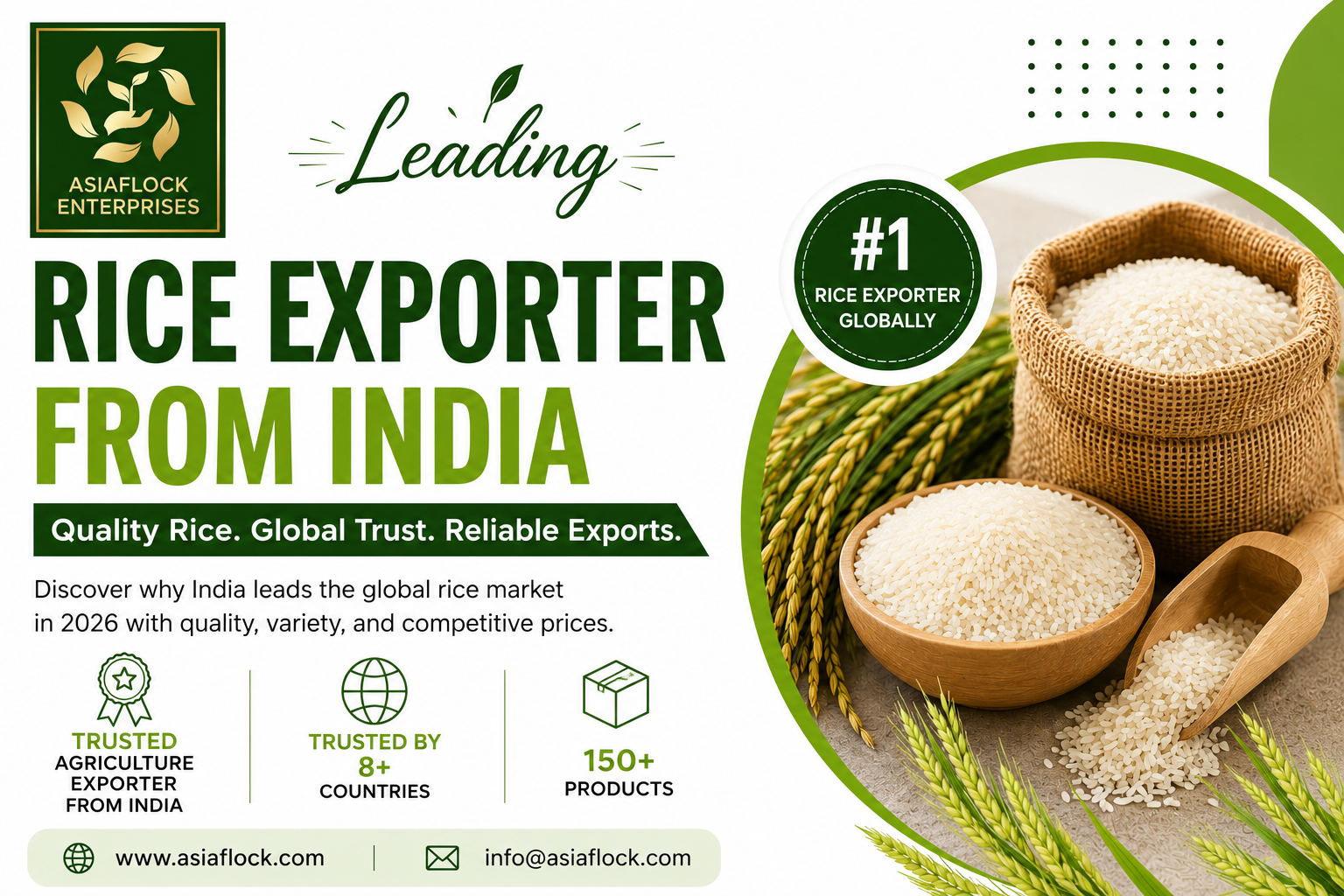

Rice is more than just a staple food in India, it’s one of the country’s biggest agricultural strengths. For decades, India has been supplying premium-quality rice to markets across the globe, and in 2026, its position has become even stronger.
From aromatic basmati rice to affordable non-basmati varieties, Indian rice continues to meet the needs of millions of consumers worldwide. Supported by record production, competitive pricing, and an efficient export ecosystem, the country remains the preferred sourcing destination for international buyers.
If you’re an importer, distributor, wholesaler, or food business looking for a dependable rice exporter from India, understanding why India dominates the global rice market can help you make better sourcing decisions.
India’s Leadership in the Global Rice Export Market
India has consistently remained the world’s largest rice exporter, supplying a significant share of the global market every year. In 2026, this leadership continued, with the country contributing nearly 40% of global rice exports according to international trade reports.
This success isn’t based on one factor alone. It is the result of strong agricultural production, an established export infrastructure, experienced processors, and the ability to serve both premium and budget-friendly markets.
Another major advantage is India’s capability to supply large volumes without compromising quality. Even after fulfilling domestic demand, the country has enough surplus production to cater to buyers across Asia, Africa, the Middle East, Europe, and several other regions.
What Makes India the Largest Rice Exporter?
There are several reasons why India continues to dominate global rice trade.
Massive Production Capacity
India remains one of the world’s largest rice producers, with production expected to stay close to 150 million metric tons in 2026. Such large-scale production ensures a steady supply throughout the year, allowing exporters to fulfill bulk international orders without disruptions.
For importers, this means dependable availability even during periods of high global demand.
Competitive Pricing
One of India’s biggest advantages is price.
Indian rice is often more affordable than rice supplied by countries such as Thailand and Vietnam. This makes it highly attractive for price-sensitive markets while still maintaining excellent quality standards.
Competitive pricing also allows importers to improve their profit margins without compromising on product quality.
Wide Variety of Rice
India offers one of the widest selections of rice in the global market.
Buyers can choose from:
- Premium Basmati Rice
- Long Grain Non-Basmati Rice
- Medium Grain Rice
- Broken Rice
- Parboiled Rice
- White Rice
- Brown Rice
This flexibility allows India to serve both luxury retail brands and large-scale food distribution businesses.
Rice Production and Quality Standards in 2026
Producing large quantities of rice is only part of the story.
Today’s international buyers expect consistent grain quality, proper moisture levels, hygienic processing, export-grade packaging, and compliance with food safety regulations.
Indian exporters have significantly upgraded their processing facilities over the years to meet these expectations.
Modern rice mills now use advanced cleaning, grading, polishing, sorting, and packaging systems that ensure every shipment meets international standards.
Exporters also pay close attention to:
- Grain length and uniformity
- Aroma and taste
- Moisture control
- Milling quality
- Packaging durability
- Traceability
- Quality inspections
These improvements have strengthened India’s reputation as a reliable rice exporter from India for buyers across multiple continents.
Major Countries Importing Rice from India
One of India’s biggest strengths is its diversified customer base.
Instead of relying on a single export destination, Indian rice reaches dozens of countries every year.
Some of the largest importers include:
- Saudi Arabia
- United Arab Emirates
- Iraq
- Iran
- Bangladesh
- Benin
- Guinea
- Cameroon
- Ivory Coast
Basmati rice continues to enjoy strong demand in Gulf countries because of its aroma and premium quality.
Meanwhile, non-basmati rice remains popular across many African nations due to its affordability and consistent supply.
This balanced export network helps India maintain stable trade even during changes in regional demand.
Why Buyers Prefer a Rice Exporter from India
Global food businesses look beyond pricing when selecting suppliers.
They also value reliability.
Working with an experienced rice exporter from India offers several advantages.
Reliable exporters ensure consistent quality across every shipment, proper export documentation, timely deliveries, flexible packaging options, and compliance with destination country regulations.
Many exporters also provide customized packaging, private labeling, container loading support, and quality certifications to simplify the import process.
These services make long-term business relationships much easier for international buyers.
Cost, Pricing and Profitability
One of the most common questions among new exporters and buyers is how profitable rice exports actually are.
The answer depends on several factors.
Profit margins vary based on:
- Rice variety
- Procurement cost
- Processing expenses
- Packaging
- Freight charges
- Shipping destination
- Exchange rates
- Import duties
- Market demand
Premium basmati rice generally commands higher prices, while non-basmati rice offers opportunities through larger shipment volumes.
Experienced exporters focus on efficient procurement, quality processing, and optimized logistics to improve profitability.
For buyers, choosing a trusted rice exporter from India helps reduce operational risks and ensures better long-term value.
Growing Demand for Indian Agricultural Exports
Rice exports are part of a much larger success story.
India has steadily become one of the world’s most trusted suppliers of agricultural commodities.
Today, many global buyers prefer working with an experienced agriculture products exporter from india because they can source multiple products from a single supplier.
Along with rice, exporters are supplying fresh fruits, vegetables, spices, pulses, coconut products, and several other agricultural commodities to international markets.
This integrated sourcing model helps buyers simplify procurement while reducing logistics costs.
Quality Expectations Continue to Rise
International food markets are becoming more quality-conscious every year.
Importers expect suppliers to provide:
- Consistent product quality
- Food safety compliance
- Export-grade packaging
- Proper certifications
- Timely shipment
- Reliable communication
Leading exporters have responded by investing in better processing technologies, warehouse management, and quality assurance systems.
The focus has shifted from simply exporting larger volumes to building long-term trust with overseas buyers.
The Bigger Picture for Agricultural Trade
India’s agricultural export industry extends well beyond rice.
Several international buyers also source products related to seeds export, helping agricultural businesses improve crop productivity across different regions.
Similarly, demand continues to grow for fertilizers and growth promoters for plants, especially as farmers around the world look for sustainable ways to improve crop yield and soil health.
This growing portfolio further strengthens India’s position as one of the world’s leading agricultural exporters.
Why Choose Asia Flock?
Finding the right export partner is just as important as choosing the right product.
At Asia Flock, we understand that every shipment represents your business reputation.
As a trusted rice exporter from India, we focus on delivering export-quality rice with consistent standards, careful sourcing, professional packaging, and dependable international logistics.
Whether you’re importing premium basmati or high-quality non-basmati rice, our team works closely with buyers to ensure smooth exports and reliable supply throughout the year.
Our commitment to quality, transparency, and customer satisfaction makes Asia Flock a preferred export partner for businesses worldwide.
Conclusion
India’s leadership in global rice exports is built on decades of agricultural excellence, competitive pricing, consistent quality, and strong international demand.
As production continues to grow and export standards become even stronger in 2026, buyers around the world can confidently rely on a trusted rice exporter from India for dependable supply and long-term business partnerships.
If you’re looking for premium-quality rice backed by professional export services, Asia Flock is ready to help your business source the right products with confidence.
Contact Asia Flock Now
Frequently Asked Questions:
1. Why is India the largest rice exporter in the world?
India produces large quantities of rice, offers competitive pricing, and supplies both basmati and non-basmati varieties to buyers across the globe.
2. Which countries import rice from India?
Major importers include Saudi Arabia, UAE, Iraq, Iran, Bangladesh, Benin, Guinea, Cameroon, and Ivory Coast.
3. What types of rice does India export?
India exports basmati rice, non-basmati rice, parboiled rice, white rice, brown rice, long-grain rice, and broken rice.
4. How do I choose a reliable rice exporter from India?
Look for exporters with consistent product quality, export experience, proper certifications, reliable logistics, and transparent communication.
5. Does Asia Flock export rice internationally?
Yes. Asia Flock supplies export-quality rice to international buyers while maintaining high standards of quality, packaging, and timely delivery.